How to Grow an Indoor Garden in a Small Space
By Maya Ellery · September 18, 2026 · 11 min read
Quick answer
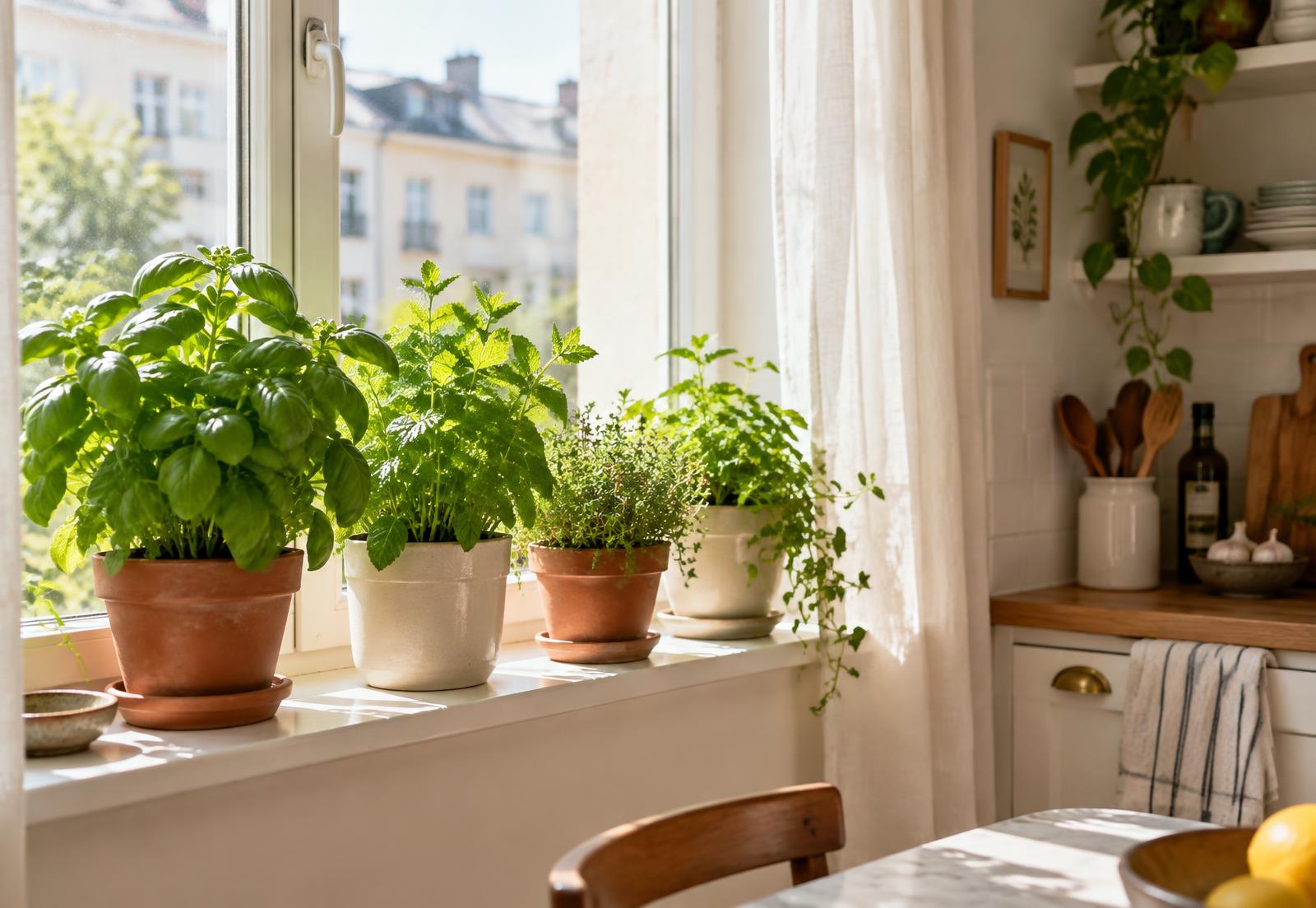
Choose the brightest window you have, start with 3–4 easy plants (basil, mint, lettuce, green onions) in pots with drainage, add a small LED grow light if the window gets less than 5 hours of direct sun, and water only when the top inch of soil feels dry.
A small-space indoor garden works differently from a backyard plot. You are not limited by season or soil — you are limited by light, by surface area, and by how much attention you can realistically give. Once you plan around those three limits, growing food indoors becomes surprisingly forgiving.
This guide walks through the same five decisions every successful indoor garden comes down to, in the order you should make them.
Start by auditing your light, not your space
Beginners usually choose a spot because it looks nice, then wonder why their basil stretches and pales. Light is the one input you cannot fake with effort. Spend a day noticing where the sun actually lands in your home.
- South-facing windows (northern hemisphere) give the most hours of direct sun — best for fruiting and herb crops.
- East and west windows give a few hours of direct sun — great for leafy greens and most herbs.
- North-facing or shaded windows give bright indirect light only — fine for foliage plants, not for vegetables without a grow light.
Pick the right few square feet
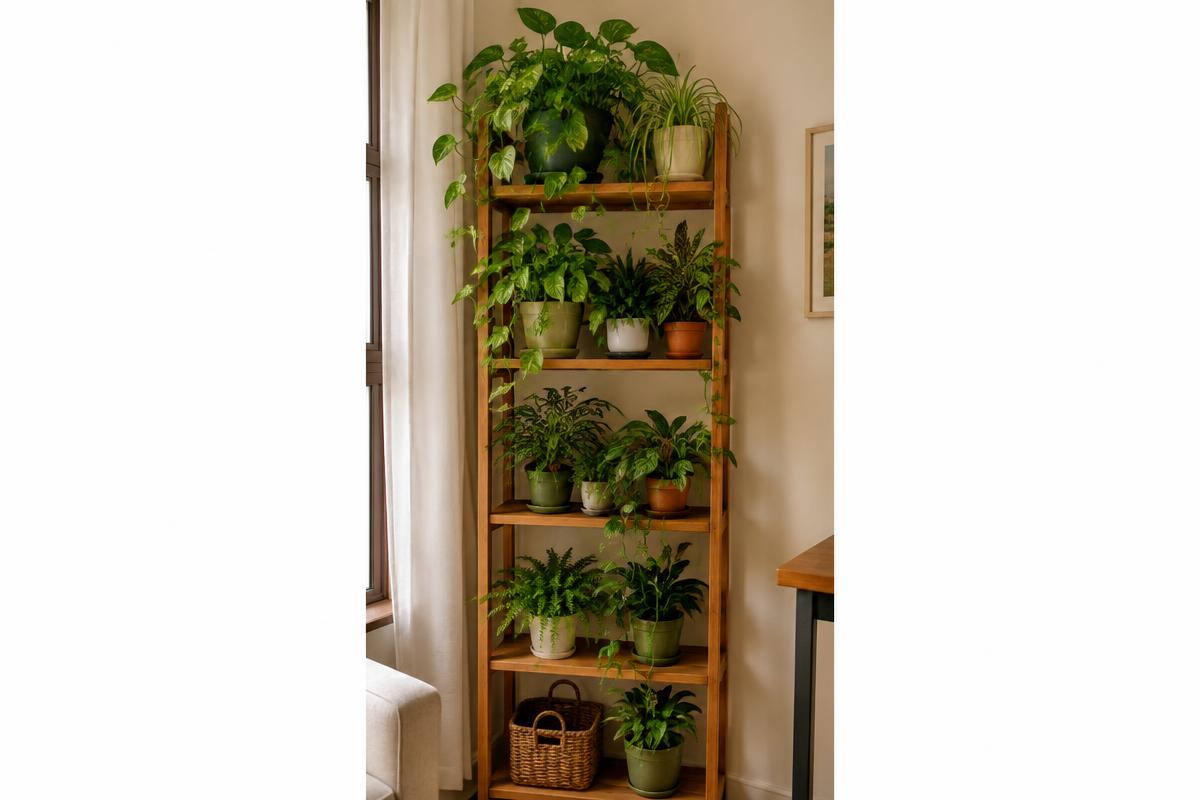
Small-space gardening is about surfaces, not floor plans. The best spots in most homes are already there: a kitchen windowsill, the top of a bookshelf near a window, a narrow console table, a rolling cart, or the vertical wall beside a window.
Go up rather than out. A three-tier shelf turns one square foot of floor into three square feet of growing surface. If you rent and cannot drill, use a freestanding plant ladder or a tension-rod shelf in the window frame.
Choose plants that forgive beginners
Your first season should be about building a watering habit, not chasing a tomato harvest. These crops tolerate imperfect light and irregular attention:
| Plant | Light needed | First harvest | Difficulty |
|---|---|---|---|
| Green onions | Bright indirect | 10–14 days | Very easy |
| Lettuce (loose-leaf) | 4+ hrs direct or LED | 3–4 weeks | Very easy |
| Basil | 6+ hrs direct or LED | 4–6 weeks | Easy |
| Mint | Bright indirect | 4 weeks | Easy |
| Microgreens | Bright indirect | 7–12 days | Very easy |
| Cherry tomatoes | 8+ hrs, grow light | 10–12 weeks | Advanced |
Three or four pots is the right number to begin with. A crowded first attempt is the single most common reason people quit.
Get containers and soil right the first time
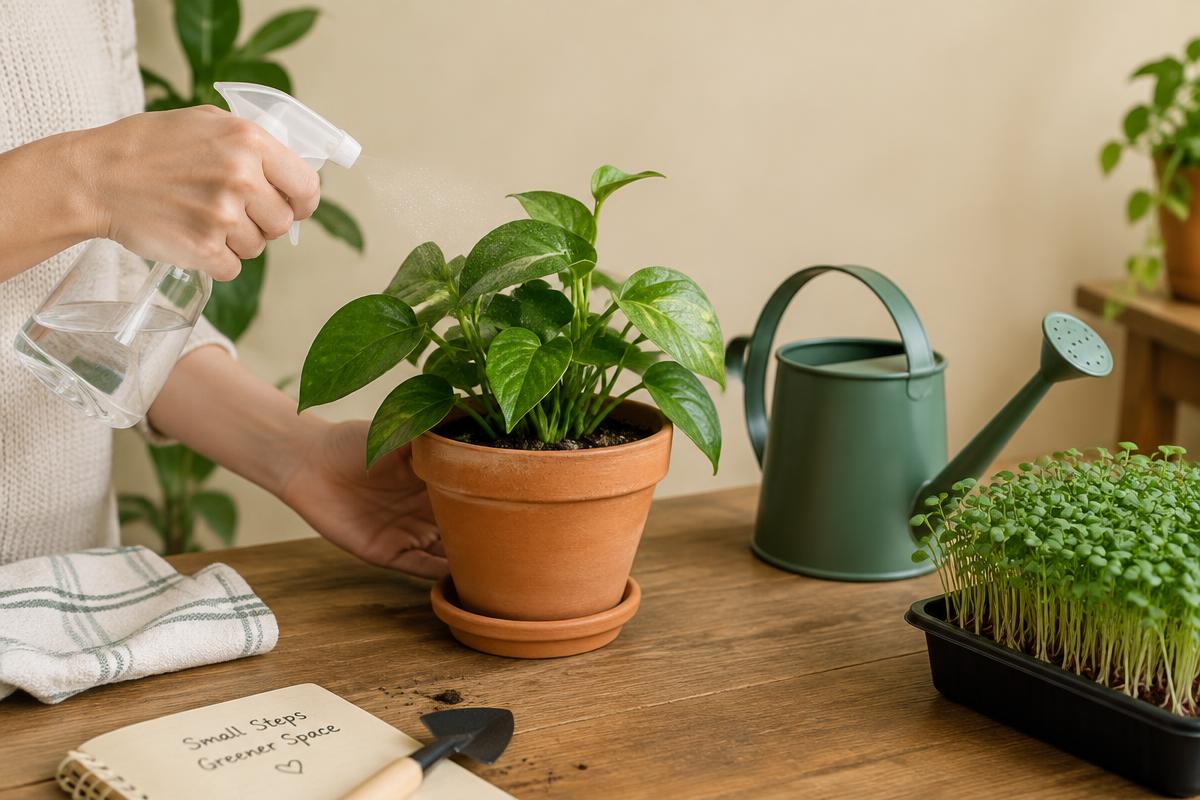
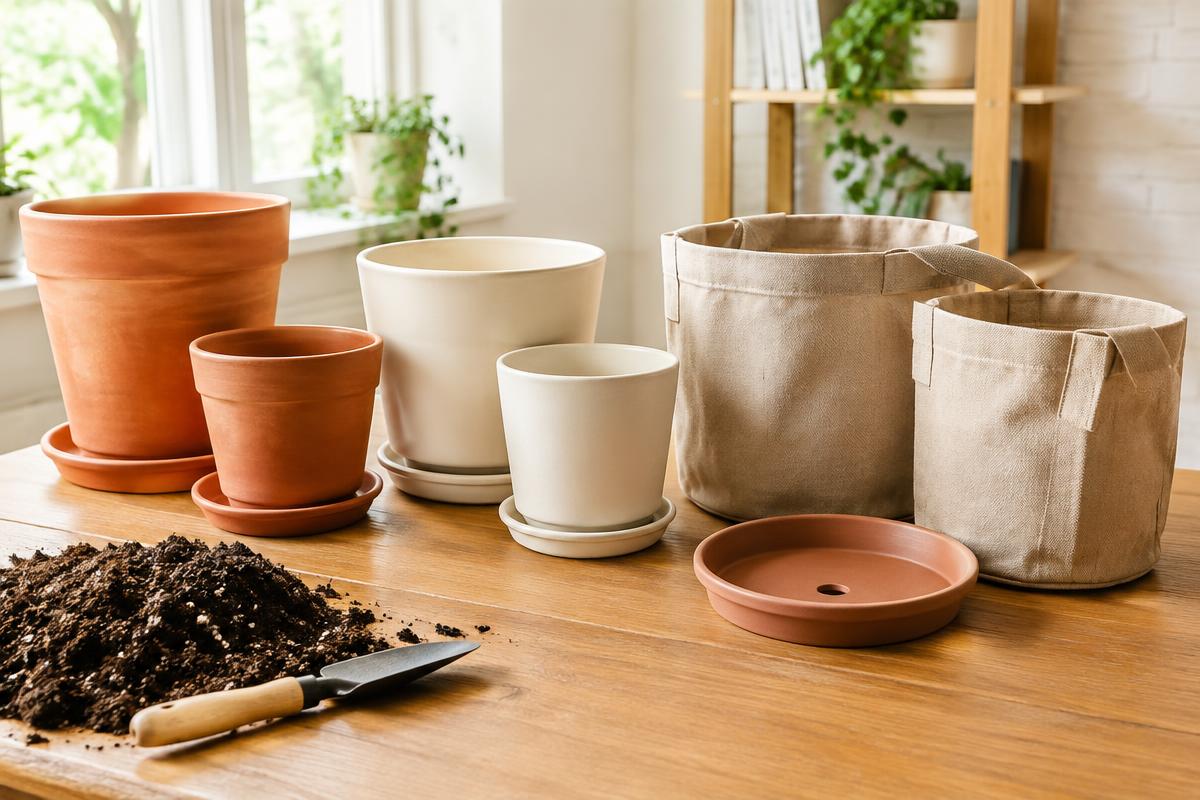
Almost every indoor plant death traces back to a pot with no drainage hole sitting in wet soil. Choose containers with drainage, put a saucer underneath, and use a light potting mix rather than garden soil, which compacts and holds too much water indoors.
- Match pot depth to roots: 4–6 inches for herbs and greens, 8–12 inches for tomatoes, peppers and root crops.
- Use a peat-free potting mix with perlite for drainage.
- Leave an inch of space at the rim so water does not run over the edge.
- Water until liquid appears in the saucer, then empty the saucer.
Add light and a simple routine
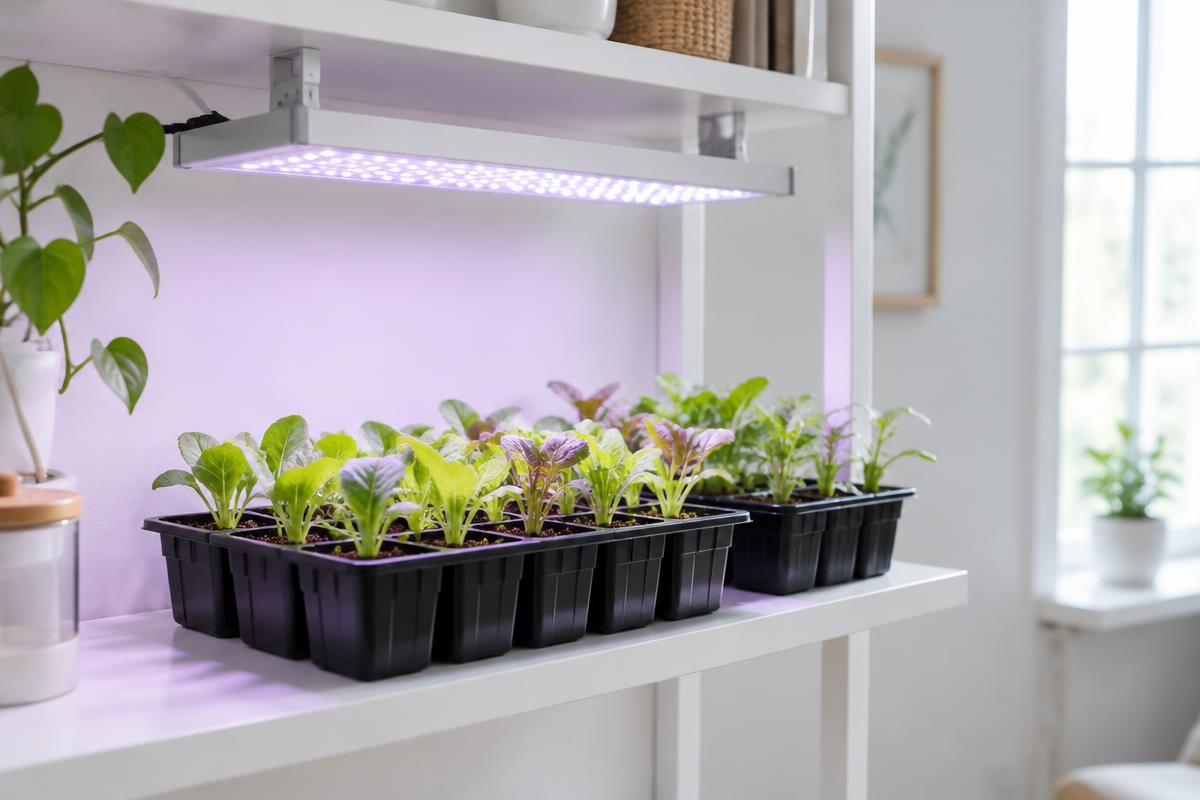
If your best window gives less than five hours of direct sun, a small full-spectrum LED bar on a plug timer will do more for your garden than any other purchase. Run it 12–14 hours a day, roughly 6–12 inches above the leaves.
Then reduce care to one weekly ritual: check soil moisture with your finger, water what is dry, rotate pots a quarter turn, snip anything ready to harvest, and feed with diluted liquid fertilizer every third week in the growing season.
Where to go next
Once your first few pots are thriving, expand deliberately: add a grow light, then a second shelf, then a trickier crop. The guides below cover each of those steps in detail.
Frequently asked questions
Can I grow an indoor garden with no direct sunlight?
Yes, but you will need a grow light for anything edible. Leafy greens and herbs do well under an inexpensive full-spectrum LED run 12–14 hours a day. Without any supplemental light, stick to foliage houseplants that tolerate low light.
How much space do I actually need?
A windowsill about 24 inches wide holds four small pots, which is enough for a working herb garden. Vertical shelving lets you grow a meaningful amount of salad greens in roughly one square foot of floor space.
What is the cheapest way to start?
Regrow green onions in a jar of water, sow a tray of microgreens, and buy one potted supermarket herb. Total cost under $15, and all three produce within two weeks.
How often should I water indoor vegetables?
Check rather than schedule. Push a finger an inch into the soil; water only if it feels dry. In a warm home that usually means every 2–4 days for herbs in small pots.