Best Containers for Indoor Vegetable Gardening
By Priya Raman · August 20, 2026 · 8 min read
Quick answer
Use 4–6 inch pots for herbs and greens, 8 inches for kale and radishes, and 10–12 inches for tomatoes, peppers and beans. Every container needs a drainage hole and a saucer; glazed ceramic and plastic hold moisture longer than terracotta.
Size by crop
| Crop | Minimum depth | Minimum width |
|---|---|---|
| Microgreens | 2 in | Tray |
| Herbs, green onions | 5 in | 5 in |
| Lettuce, arugula, spinach | 6 in | Window box |
| Kale, radish, chard | 8 in | 8 in |
| Bush beans, peppers | 10 in | 10 in |
| Dwarf tomatoes | 12 in | 12 in |
Materials compared
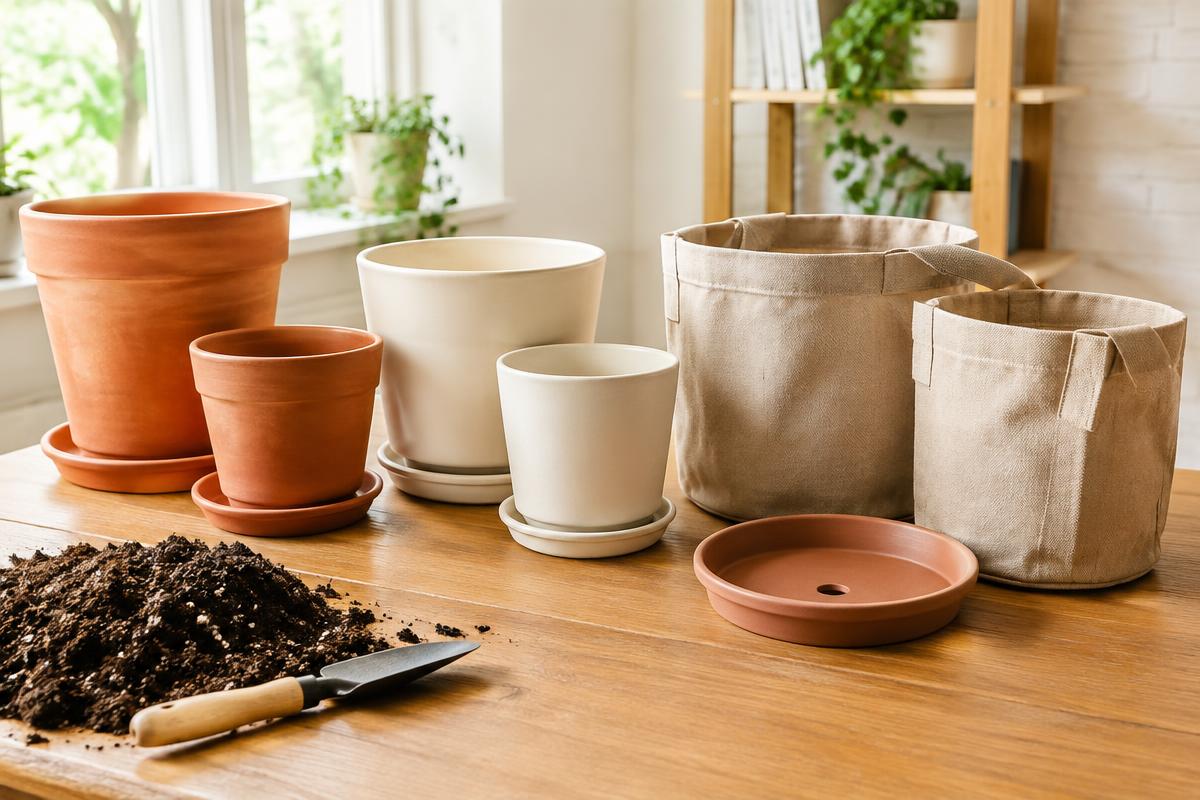
- Terracotta — breathable and attractive, dries fast; great for rosemary and thyme, demanding for thirsty crops.
- Glazed ceramic — holds moisture, heavy, best for a fixed shelf.
- Plastic — light, cheap, retains water; ideal for a shelf you rearrange.
- Fabric grow bags — excellent aeration and foldable for storage, but they weep, so use a tray.
- Self-watering planters — reservoir smooths out missed waterings; superb for lettuce and basil.
Container types worth owning
Self-watering window box
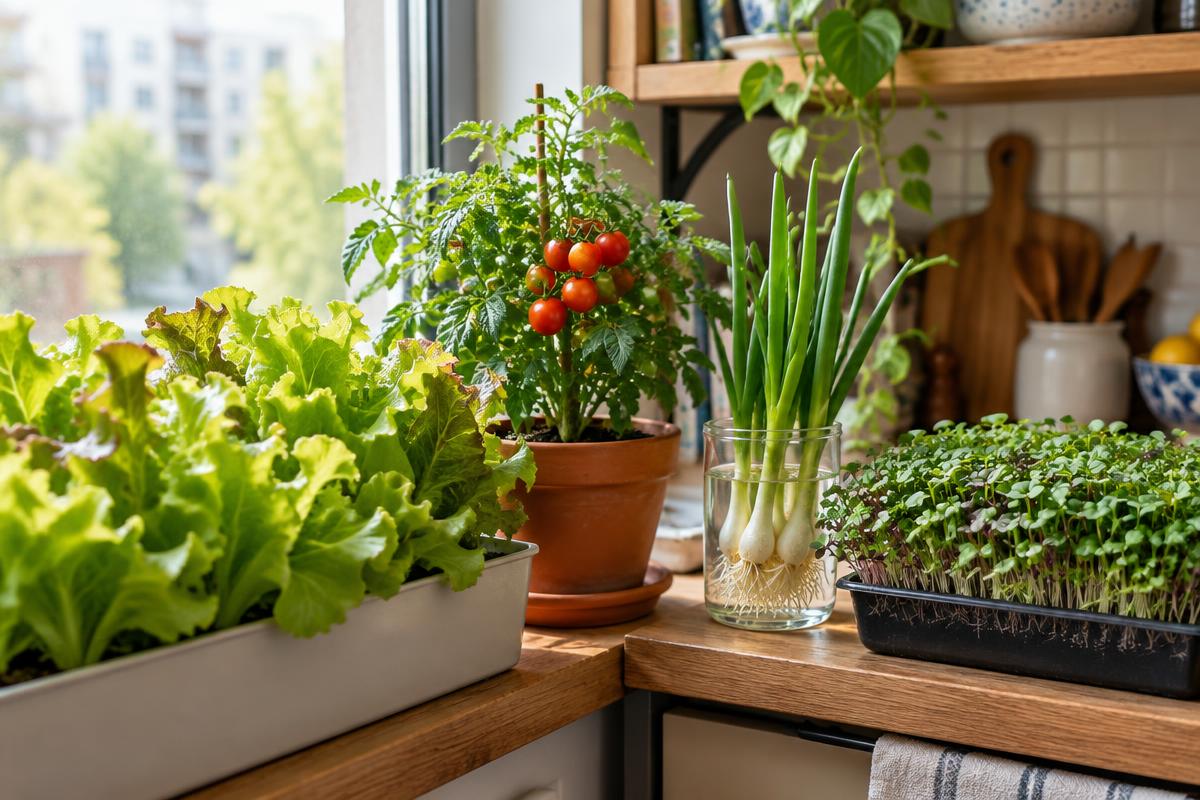
A long planter with a water reservoir below the soil, sized to sit on a windowsill or shelf edge.
Best for: Lettuce, arugula and basil
Pros: Very even moisture · Forgiving if you travel · Good use of a narrow sill
Cons: Reservoir can stagnate if never emptied · Bulkier than plain pots
Fabric grow bag set
Breathable fabric pots in 1–5 gallon sizes that fold flat when not in use.
Best for: Tomatoes, peppers, dwarf kale
Pros: Great root aeration · Stores flat between seasons · Lightweight when moving
Cons: Needs a waterproof tray indoors · Dries out faster than plastic
Drainage is non-negotiable
If a pot you love has no hole, drill one or use it as a cachepot with a plain nursery pot inside. Empty saucers 20 minutes after watering so roots never sit in standing water.
Soil mix for containers
Use indoor potting mix with added perlite — roughly four parts mix to one part perlite for herbs, more for Mediterranean plants. Refresh the top inch each season and repot fully once a year.
Frequently asked questions
Can I grow vegetables in pots without drainage holes?
Not reliably. Without drainage, salts build up and roots sit in water. Use the pot as an outer sleeve and keep the plant in a draining nursery pot.
Are self-watering pots good for herbs?
Excellent for basil, mint and parsley. Less suited to rosemary, thyme and sage, which prefer drying out between waterings.
How often should I repot?
Once a year for perennial herbs, or whenever roots circle the pot base and water runs straight through.